The Farm
A real farm, not a backdrop.
Integrated cultivation, livestock and aquaculture, planned for the dry-zone conditions of Vavuniya — and designed so that each part of the farm supports the others.
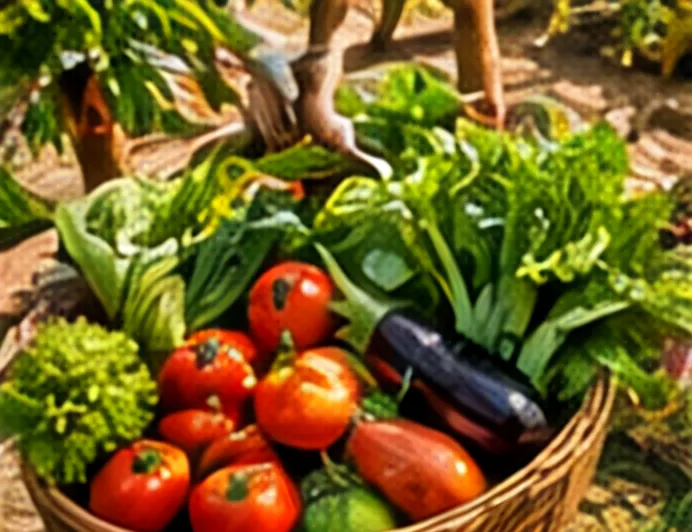 Artist's impression
Our farming philosophy
Work with the land, waste as little as possible, and share what we learn.
Nature Nest is planned as a genuine agricultural development — the farm comes first, and guests come to experience it.
We intend to grow a diversity of crops and keep a small number of animals, returning what the farm produces — manure, kitchen scraps, garden trimmings — to the soil as compost. Water will be treated as precious, in a district where rain falls mainly in a few months of the year.
We plan to minimise synthetic fertilisers and pesticides, building soil health through compost, mulching and careful crop planning. Methods will be developed with qualified agricultural advisers and adjusted to what works on this land.
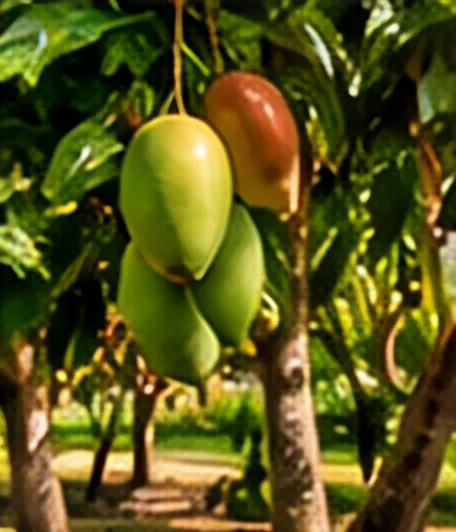 Artist's impression
Fruit orchard
Shade, fruit and a place to walk.
A mixed tropical orchard is planned along the southern edge of the estate, with a walking path through it for guests. Fruit is intended for the restaurant, for guests and — in good seasons — for sale locally.
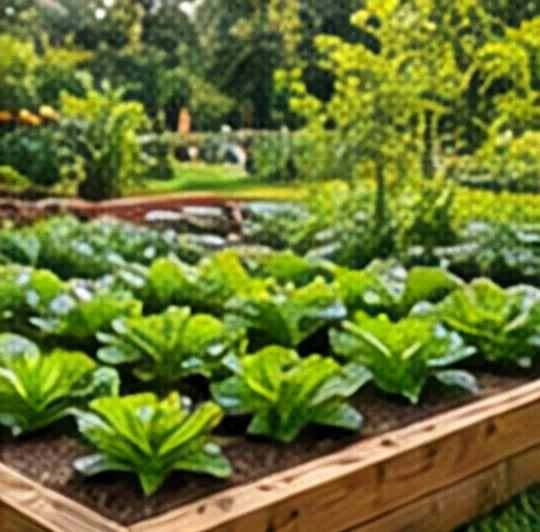 Artist's impression
Vegetable cultivation
Vegetables for the kitchen, grown steps away.
Raised vegetable beds enriched with compost are planned close to the cottages, watered by drip irrigation. Planting will follow the seasons, with the kitchen menu following the beds.
 Artist's impression
Herbs & spices
The flavour of the farm.
A dedicated herb and spice garden is planned beside the paths between the cottages and the restaurant — for cooking, for herbal teas and for guided herb walks.
Livestock
Cattle and goats, cared for properly.
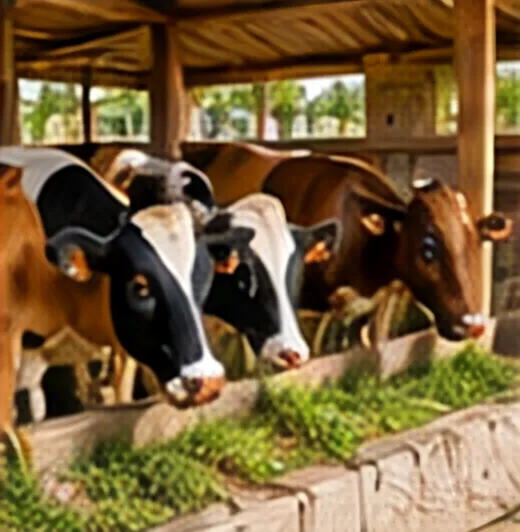
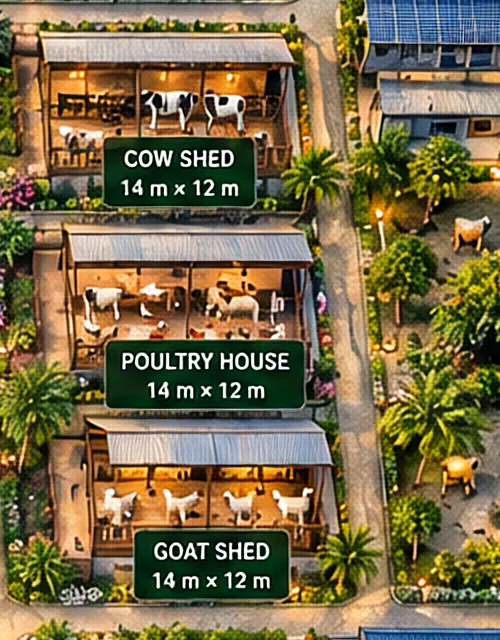
The concept plan includes a cow shed and a goat shed, each with space for animals to move outdoors. A small number of animals is planned, with breeds and numbers to be decided with livestock and veterinary specialists to suit local conditions.
Manure from the sheds is intended to be composted and returned to the vegetable beds and orchard. Goats may help to manage vegetation in parts of the orchard.
 Concept plan
 Artist's impression
Poultry
Free-range poultry and fresh eggs.
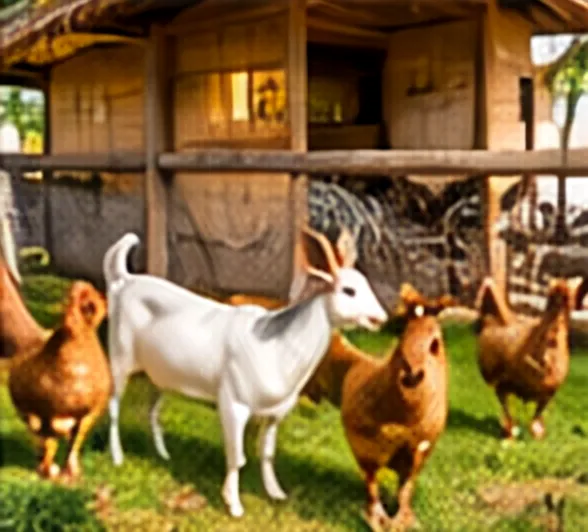
A poultry house with space to roam is planned for fresh eggs for the kitchen. Poultry litter, combined with other manures and plant material, is intended to enrich the farm’s compost. Collecting eggs is planned as a favourite activity for younger guests.
 Concept plan
Aquaculture
A fish pond that works twice.
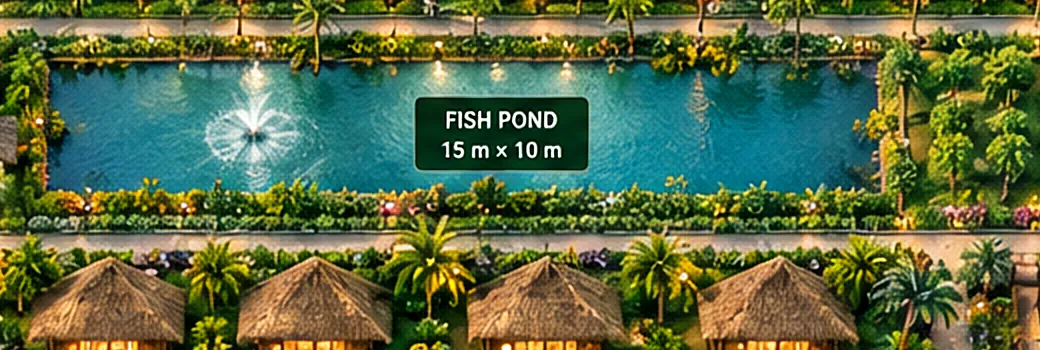
A freshwater fish pond — around 15 by 10 metres in the concept plan — is planned near the northern edge of the estate. As well as fish for the kitchen, the pond is intended to store water, and nutrient-rich pond water may be used to irrigate vegetable beds. Fish species and stocking will be decided with specialist advice.
Water management
Every drop counts in the dry zone.
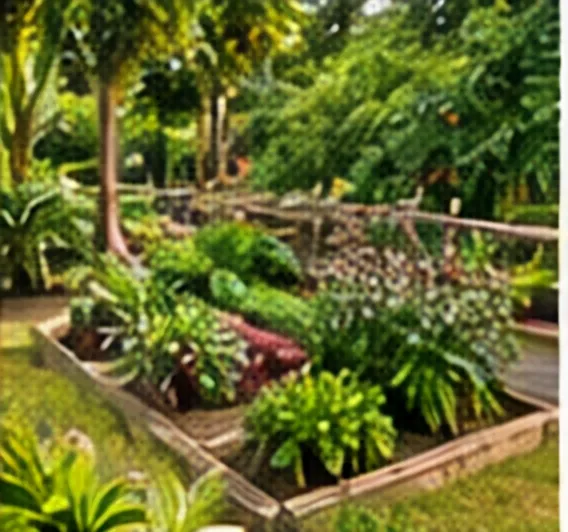
Vavuniya receives most of its rain in a distinct wet season from around October to December. Planning for the dry months shapes the whole farm.
Rainwater harvesting
Collecting rain from roofs for storage and later use.
Pond reserve
The fish pond planned as a water store for the farm.
Drip irrigation
Water delivered to roots, reducing evaporation and waste.
Mulching & reuse
Mulch under trees and, where appropriate and permitted, treated greywater for irrigation.
 Artist's impression
Composting
Nothing useful wasted.
A nursery and compost area is planned on the eastern side of the estate. Kitchen scraps, animal manure, garden trimmings and other organic material are intended to be composted in bays — with a worm-compost system for a richer finished product — and returned to the beds and orchard.
Seedlings for the gardens and for tree-planting are planned to be raised in the same area.
Integrated farming
How it fits together.
Integrated farming brings different agricultural activities together so that resources, knowledge and by-products can be used more efficiently.
- Healthy soil grows vegetables, herbs and fruit.
- Fresh produce goes to the farm kitchen and our guests.
- Food scraps and animal manure become compost.
- Compost returns organic matter to the soil.
- Rainwater is stored in the fish pond, which supplies water and nutrients to the crops.
This shows how the farm is designed to work. Real results will depend on the land, the seasons and careful management.
Farm learning
A working farm that teaches.
Over time, the working farm is intended to become a practical learning environment — for curious guests, for school groups and for farmers from surrounding villages — subject to programme development and operational capacity.
Future farmer demonstrations could include demonstration plots, field days and practical workshops on integrated farming, led with qualified agricultural specialists.
Want to see the farm grow?
Follow our journey for real updates as the land is prepared and planted.